Lawsuit Filed Challenging Newsom's Plan To Commute All California Death Sentences

1 hour ago
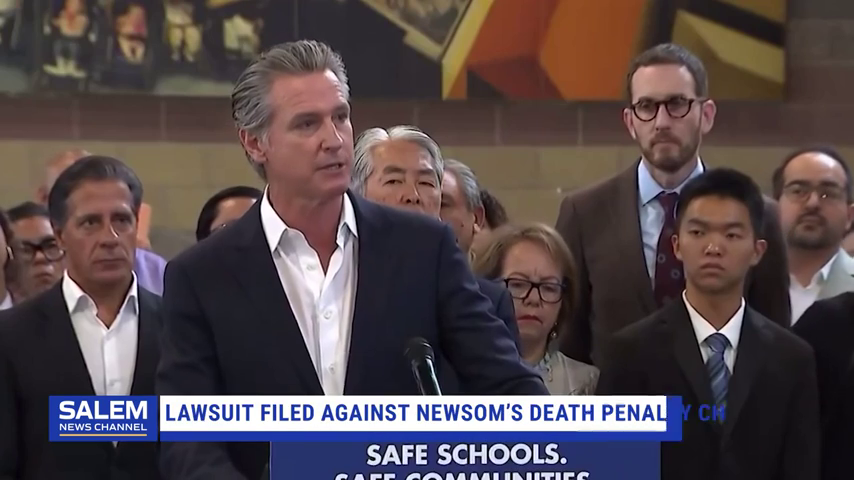
A lawsuit has been filed challenging California Governor Gavin Newsom's plan to commute all 548 death row sentences in the state to life in prison without the possibility of parole.
The legal challenge, filed with the California Supreme Court, is backed by district attorneys, law enforcement organizations, victims' rights advocates and families of murder victims.
The Criminal Justice Legal Foundation argues that Newsom exceeded his authority by attempting to change hundreds of death sentences without conducting individual reviews or following required legal procedures.
The lawsuit also accuses the governor of failing to provide prosecutors and victims' families with proper notification and an opportunity to be heard before announcing the sweeping clemency action.
Newsom announced his decision on November 5, saying he intended to commute every death sentence in California. The governor has long opposed capital punishment and previously imposed a moratorium on executions in 2019.
Under the proposal, condemned inmates would remain incarcerated for life without parole. Their underlying convictions would not be overturned, and they would not become eligible for release.
However, the commutations have not yet taken effect, and some require additional legal review.
Of the 548 death sentences involved, 382 require a recommendation from the California Supreme Court because those inmates have multiple felony convictions.
Prosecutors challenging the decision argue that Newsom is disregarding the judgments of juries and courts, as well as the rights of victims and their surviving relatives.
The governor's office maintains that Newsom has constitutional authority to grant clemency. It also argues that certain notification requirements do not apply when a governor initiates commutations without receiving applications from individual inmates.
California voters rejected measures to abolish the death penalty in 2012 and 2016. The state has not carried out an execution since 2006.
The California Supreme Court is now considering the legal questions surrounding Newsom's proposal, while the new lawsuit seeks to prevent the commutations from moving forward.